Thomas Lockley’s A Gentleman from Japan: The Untold Story of an Incredible Journey from Asia to Queen Elizabeth’s Court (Hanover Square Press) is an incredible story. Those interested in China may also want to read as it notes the service of one of the first Japanese to visit Britain in translating one of the first maps of China to fall into British hands (pirated off a Spanish Manila Galleon off California) in the 1580s – sadly now “lost” but perhaps one of master cartographer Luo Hongxian. the Britihs simly called it a “Mappe of China”. Naturally the Japanese “Christopher” was able to read the Chinese characters and amaze the British seaman with details such as Peking’s population, the size of China’s army etc. This was a century before the Jesuit scholar “Michael” Shen Fuzong arrived in England and to Oxford University.
“On November 12, 1588, five young Asian men–led by a twenty-one-year-old called Christopher–traveled up the River Thames to meet Queen Elizabeth I. Christopher’s epic sea voyage had spanned from Japan, via the Philippines, New Spain (Mexico), Java and Southern Africa. On the way, he had already become the first recorded Japanese person in North America. Now Christopher was the first ever Japanese visitor to England, and no other would leave such a legacy for centuries to come.”
Join online to hear how Deng Xiaoping ensured the continuation of China’s reforms with his Southern Tour in 1992. The legacy of the period is complicated, as Jonathan Chatwin will explain as he introduces his new book on Deng’s important mission. Don’t miss this dive into a critical moment in China’s near history that sometimes feels very far away.
ONLINE Tuesday 9th , 7pm-8pm Beijing Time
MORE ABOUT THE EVENT: At the age of 87, Chinese leader Deng Xiaoping made his Southern Tour, which acted as an end chapter to his life story and to the first phase of China’s “reform and opening” campaign. After that, reform became a much more technocratic affair, and the narratives of the subsequent Jiang Zemin and Hu Jintao eras were perceived as less historic in this regard. The public can still view Deng’s statue in Shenzhen, but the thirtieth anniversary of the Southern Tour in 2022 passed with hardly a mention. Jonathan will introduce his new book, The Southern Tour: Deng Xiaoping and the fight for China’s future, in which he traces the journey made by the theoretically retired leader in 1992, as Deng tried, against the odds, to kickstart reform.
ABOUT THE AUTHOR: Jonathan Chatwin is a journalist and non-fiction writer. He holds a PhD in English Literature, and his first book was a literary biography of the travel writer and novelist Bruce Chatwin, to whom he is distantly related. More recently, Jonathan has written extensively on modern China and its history. His travel book Long Peace Street employed the device of a long walk along Beijing’s Chang’an Jie to explore the capital and its pivotal role in the national story. Jonathan’s work has appeared in CNN, the South China Morning Post and the BBC, amongst other publications. He is joined by English historian and broadcaster Michael Wood in this Zoom talk on his new book, The Southern Tour: Deng Xiaoping and the fight for China’s future.
Michael Wood is president of the Society for Anglo-Chinese Understanding, an organisation founded in 1965 to promote understanding and friendship between the British and the Chinese peoples. His documentary, Du Fu: China’s Greatest Poet attracted praise in both the UK and China, and was turned into a book, The Story of China: A Portrait of a Civilisation and its People’ (Simon & Schuster), published in 2016.
HOW MUCH: This online event is free for members of RASBJ; RMB 50 for members of partner RAS branches; RMB 100 for non-members. You may find payment by Alipay easier than by WeChat. You can also pay by credit card. Interested in becoming an RASBJ member? Please sign up at https://rasbj.org/membership
HOW TO JOIN THE EVENT: No later than noon on 5th July, please click “Register” or “I will Attend” and follow the instructions. After successful registration and payment, you will receive a confirmation email. If you seem not to have received it, please check your spam folder.
Members of partner RAS Branches: Please register 72 hours in advance to allow time for membership verification. You’ll receive three emails from us: the first confirming receipt of your registration request, the second requesting payment, and the third confirming receipt of your payment. Please check your spam folder to ensure you see all RASBJ emails.
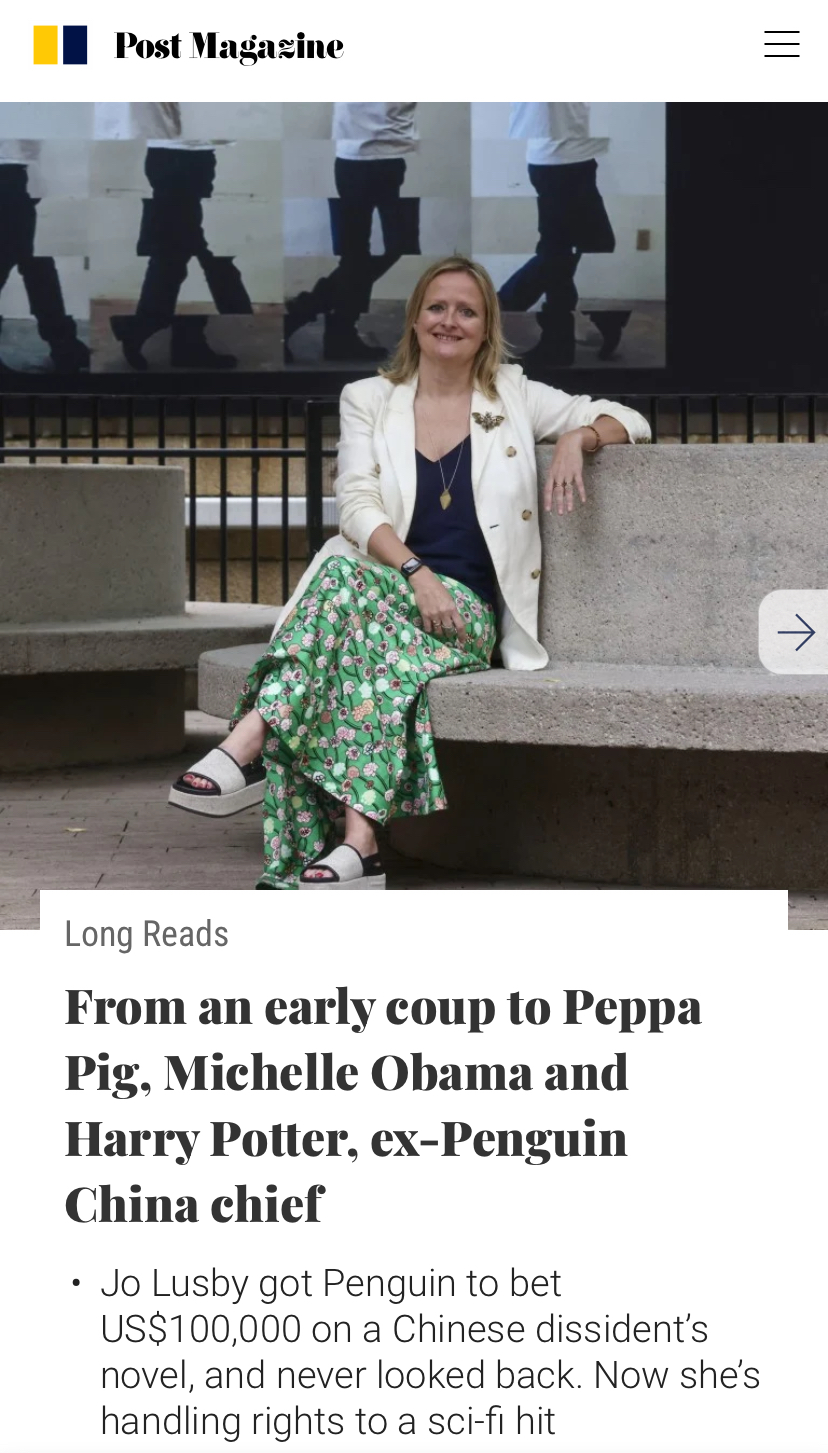
A profile in this weekends South China Morning Post magazine of Jo Lusby, my old editor and publisher Penguin China – what times back in Beijing!! click here…
RIP Ismael Kadare (1936-2024) – for those with a China bent who may not have read him before I recommend The Concert(1988)…
It’s the 1970s and cracks are starting to appear in the alliance between China and its Communist cohort Albania. When an Albanian steps on the foot of a Chinese diplomat the tension cranks up – couriers between Tirana and Beijing carry annotated x-rays of the foot back and forth. The Chinese intend to punish their interfering little ally discreetly. But is the Sino-Albanian axis about to come adrift? This is Kadare’s surreal black comedy about the inner sanctums of political power and the mysterious causal chains that transform ordinary lives.
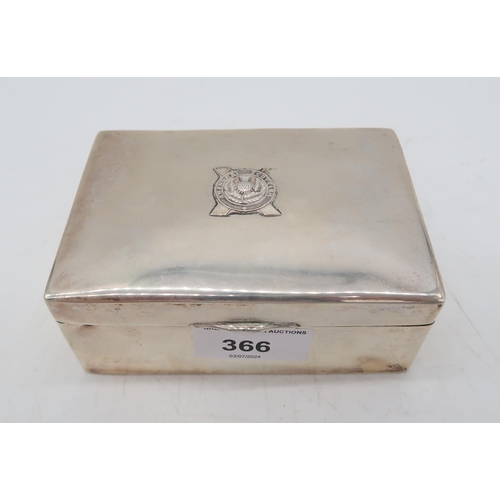
Dwight Condo Baker was from Des Moines, graduated from the University of California in 1914 and worked there as a professor of History till 1931 when he became President of Modesto Junior College. He served in both World War One and Two (with the OSS between 1943-1945). He died in 1971.
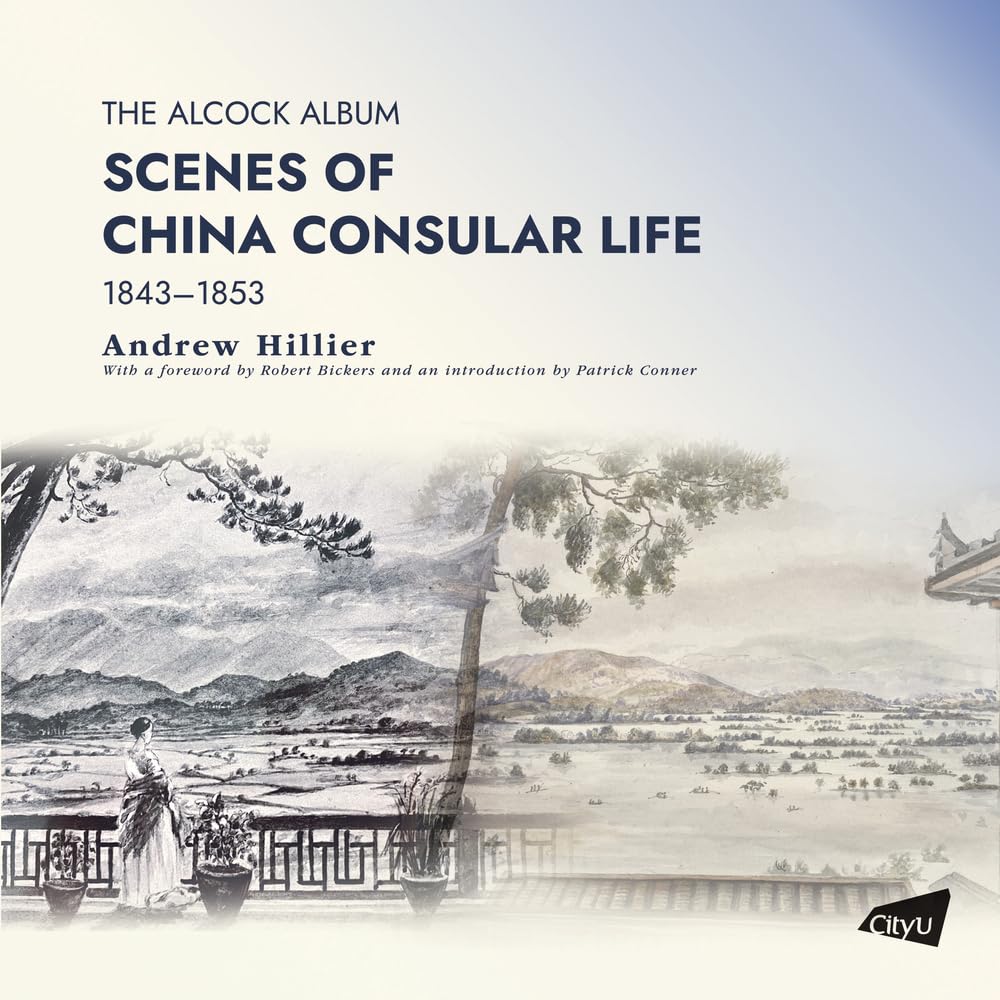
Andrew Hillier’s The Alcock Album: Scenes of China Consular Life, 1843-1853 (City University of Hong Kong Press) contains many paintings and sketches by Henrietta Alcock. Of great interest to me given my own writings on interwar female professional artists and “amateur lady artists” (as they were often called) in China – here on Anna Hotchkis and Mary Mullikin, Katharine Karl, and Katharine Jowett. Very interesting to see how many of Alock’s works show parts of China in the 1840s (especially the newly forced open treaty ports) nearly a century before many of these later women artists were working.
The Alcock Album is a collection of watercolours and sketches by Henrietta Alcock and her husband, the British Consul, Rutherford Alcock. This book presents artwork from the album and the stories behind them, providing a unique window into the first phases of consular life in treaty port China. Through these images, readers can get a glimpse of traditional. Chinese architecture, picturesque landscapes, and consular buildings, along with a picture of a happy, loving marriage and the significant role of consular wives during this period.