Posted: September 22nd, 2012 | No Comments »
PROFESSOR MABEL LEE
on
Probing Beneath the Surface of Gao Xingjian’s
Soul Mountain and One Man’s Bible
Saturday 22nd September 2012 at 4.00pm
The Tavern, Radisson Blu Plaza Xingguo Hotel 78 Xing Guo Road, Shanghai

2000 Nobel Laureate Gao Xingjian’s novels Soul Mountain (1990) and One Man’s Bible (1999) are two works of autobiographical fiction that document his life in China. He began writing Soul Mountain in Beijing in 1982 for his personal enjoyment, believing that it had no prospect of ever being published. Even when he travelled to Europe at the end of 1987 and settled in Paris, he considered it only to be a temporary respite that would allow him to write freely. However, circumstances were such that prompted his decision not to return to his ancestral land as long as it remained under authoritarian rule. His bringing Soul Mountain to completion was a psychological strategy as well as a symbolic gesture to sever ties with China. He became a French citizen in 1997, and around the same time began his second novel One Man’s Bible.
Soul Mountain and One Man’s Bible are without precedent in world literature and have been translated into many languages, in the case of Soul Mountain into well over thirty languages. In probing beneath the surface of these two novels this talk will consider issues such why he chose to write autobiographical fiction, the significance of his using pronouns instead of named characters, and what literary traditions and practices can be said to have informed his writing.
Mabel Lee PhD FAHA is Adjunct Professor of Chinese Studies in the School of Languages & Cultures at the University of Sydney. She enjoys an international reputation for her translations of Soul Mountain, One Man’s Bible and other works by 2000 Nobel Laureate Gao Xingjian, as well as for her critical studies on his literature, art and film. In 2008, on the occasion of the 50th anniversary of the United Kingdom’s Translation Association of the Society of Authors, her translation of Soul Mountain was listed as one of the “50 outstanding translations of the last half century.”
Suggested Entrance Fee: RMB 30.00 (RAS members) and RMB 80.00 (non-members).
Includes one drink: 150ml glass of red or white wine / draft beer / soft drink / tea or coffee.
Those unable to make the donation but wishing to attend may contact us for exemption, prior to the RAS Weekender event. Membership applications and membership renewals will be available at this event.
RSVP: “Reply” to this email or to RAS Bookings at: bookings@royalasiaticsociety.org.cn
N.B. RAS members will have booking priority until Wednesday September 19th
RAS MONOGRAPHS – Series 1 & 2 will be available for sale at this event. 100 rmb each
Posted: September 21st, 2012 | 1 Comment »
The 1910 Nanyang industrial exposition, or perhaps better known as the 1910 Nanyang Exposition, was the official world’s fair held in Nanking (Nanjing) on June 5, 1910. I happened upon this early floor plan of the site in the February 25th edition of the North-China Herald. The map was designed to appeal to foreign nations planning to attend. America, Britain and a host of European and Asian countries did indeed attend.
PS: More pics from the Nanyang Expo at my new Tumblr site which now acts as a bit of an overspill for this blog – http://chinarhyming.tumblr.com/

Posted: September 20th, 2012 | No Comments »
I haven’t got down to Singapore for a while or posted anything on Singapore for a bit so I thought I’d make quick mention of the Gillman Barracks which has been converted into an art space and a collection of art galleries. Gillman Barracks is located on the site of a former military camp named after the late General Sir Webb Gillman, a well-known British army officer. Set up in 1936 to accommodate the expansion of the British infantry in Singapore, the camp consists of 14 buildings that were taken over by the Singapore Armed Forces (SAF) in August 1971 as part of the withdrawal of the British military from Singapore. After the SAF vacated the camp in the 1990s, the buildings were used for commercial purposes and the site was renamed Gillman Village in 1996. The site reverted to its original name, Gillman Barracks in 2010 and will open its doors as a contemporary art destination, housing art and creative businesses, as well as dining options.
I’m heading to Singapore the first weekend of November to speak at the Singapore Writers Week so expect to have more on the site then when I can actually get out and see it for myself.
And, by the way, thanks to Sue Anne Tay of the Shanghai Street Stories blog for recommending this great site on Singapore heritage to me.
 Gillman Barracks Officers Mess building
Posted: September 19th, 2012 | No Comments »
Here’san interesting cover from a 1930s guide to Hangchow (Hangzhou) issued by the Lakeview Hotel. Some very good design work redolent of the decade. There is still a Lakeview Hotel in Hangzhou but it appears to be a modern building and I’m not even sure if it’s actually on the site of the old hotel though it does give a view over the famous West Lake. I’m afraid I don’t have a picture of what the hotel looked like in the 1930s. Still, I’ll post a few old Hangchow pics of my Tumblr site.

Posted: September 18th, 2012 | No Comments »
Kunal Basu’s The Yellow Emperor’s Cure is out and looks interesting…
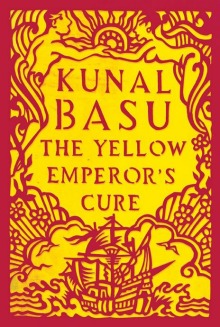
In a breakout novel that transports the reader to a brilliantly imagined, sensuously portrayed, dangerous point in history, Kunal Basu has written the tale of a man’s journey that spans continents–and the limits of his faith in science. Lisbon, 1898: Antonio Maria, surgeon and notorious playboy, returns home after a long absence to learn his beloved father has syphilis, the scourge of both rich and poor. Determined to find a cure, Antonio sets sail for Peking, to study under the evasive but renowned Dr. Xu. But Dr. Xu does not intend to give away his knowledge, and Antonio suddenly falls in love with his assistant, the elusive Fumi. The threat of the advancing Boxer rebellion hangs over the Summer Palace, and Antonio and Fumi must decide whether to flee together or remain in China. Kunal Basu’s lush, haunting tale invites comparisons to Michael Ondaatje’s best work. This superb novel conjures a man discovering the love that will force him to question everything.
Posted: September 17th, 2012 | No Comments »
I haven’t got round to reading The Map of Lost Memories yet though it comes highly recommended as a great fun weekend read.
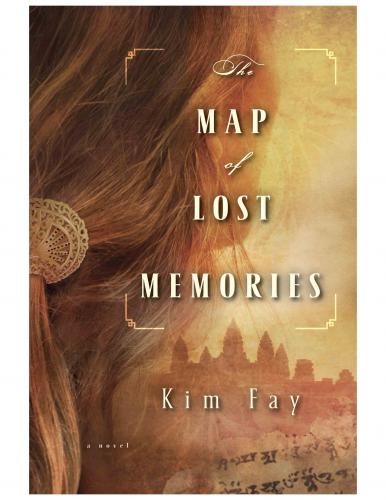
The one thing to remember about an adventure is that if it turns out the way you expect it to, it has not been an adventure at all . . . Shanghai, 1925. Irene, a museum curator (and, unoffically, a treasure hunter) is searching for a set of legendary copper scrolls which describe the forgotten history of Cambodia’s ancient Khmer civilisation. Her mentor has sent her to China to enlist the help of Simone, a mercurial Frenchwoman who – along with her notoriously violent husband, ‘the most dangerous man in the Orient’ – has a reputation for both stealing artefacts and starting revolutions. Irene and Simone set off through the Cambodian jungle to search for the scrolls, but it soon becomes clear that each is determined to acquire them for her own reasons, and that once they have located them it will be every woman for herself . . . Gripping, evocative, lavish and thrilling, this is an unforgettable book that was listed as one of Amazon’s top 100 Breakthrough Novels before it was even finished.
Posted: September 17th, 2012 | No Comments »
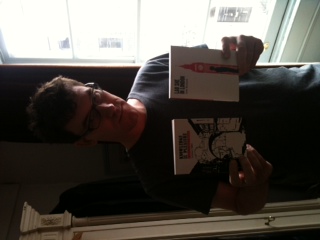
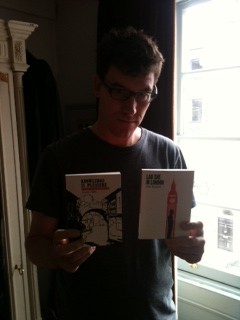
Just to let people know what my lovely new series of Royal Asiatic Society Shanghai – Hong Kong University Press China Monographs look like (they’re just 35,000 words and very tight and well edited). I’m well pleased and hope they sell….you can get them here and soon on Amazon…
Posted: September 16th, 2012 | No Comments »
A reminder for anyone down Bristol way on Monday – I’ll be doing an event at Foyles there with Robert Bickers (who should need no introduction to China Rhyming regulars) as part of the Observer Bristol Festival of Ideas which should be fun. It’s a free event but you do need to book (here) due to space at the bookstore.
Old China’s Secret Worlds Revealed
17 September 2012, 18.30-19.30
Foyles, Cabot Circus, Bristol

China has often remained inscrutable to Westerners but new research is opening up aspects of Chinese history hidden for decades and centuries. In his The Scramble for China: Foreign Devils in the Qing Empire, 1832-1914, Robert Bickers, Professor of History at Bristol University, looks at the way China attracted the attention of British and European powers in the early nineteenth century. He discusses this with Paul French, author of Midnight in Peking: The Murder That Haunted the Last Days of Old China, the shocking story of Pamela Warner, teenage daughter of the city’s former British consul Edward Werner murdered in 1937. Despite an intensive search, the murder was soon forgotten amid the carnage of the Japanese invasion by all but her father. 75 years later, deep in the Scotland Yard archives, French accidentally came across his lost case file. Unveiling an undercover sex cult, heroin addicts and disappearing brothels, the truth behind the crime can now be told – and is more disturbing than anyone could imagine. Both talk of a hidden China and one that has much to tell us about China today.
Robert Bickers is the author of the highly-acclaimed Empire Made Me. He has written extensively on Chinese history and is currently Professor of History at the University of Bristol. To write his latest publication, The Scramble for China, he travelled extensively, visiting many of the haunting sites scattered across China that feature in the book.
Born in London, Paul French has lived in China for more than ten years. He is the Chief China Analyst for UK market research publisher Mintel, based in Shanghai; his books include a history of North Korea, a biography of Shanghai adman and adventurer Carl Crow, and a history of foreign correspondents in China.