There will inevitably be much talk of solar eclipses this week – personally I’ll be on a roof top in Taiwan to watch it (if I get up early enough – 8am is a bit of a push for me!). Fishing around for information I came across this interesting paper from physicist Virendra Nath Sharpa on the history of the Jesuit astronomers of the eighteenth century in India and China. The Jesuits were of course a very intelligent bunch of scientists at the time (despite being religious believers and refusing to incorporate the Copernican revolution into their thinking – the man himself pictured left). An interesting piece including an account of a predicted eclipse that never happened and was a bit embarrassing for all concerned. Hopefully that won’t be repeated on Wednesday morning.
Earlier this year despite pleas from architectural experts a typically vandalistic real estate company demolished the 106-year-old Shanghai Rowing Club to make way for new construction. The philistines of the Shanghai New Huang Pu Real Estate Co Ltd won again (when do they not in Shanghai to be honest?) and the structure was torn down- over a century of history gone in the flash of a bulldozer. Ruan Yisan, one of the the city’s foremost experts in historic architecture protection, went to the construction site and appealed for the building to be protected. But the interior of the club had already been destroyed. The club is being torn down in a project entitled the ‘Bund Origin’ (no sense of irony intended by the developer here!!), a ‘reformation’ of the Bund area.Too disgusting for words really.
Ruan had told them that the building needed to be preserved for its historic and cultural value. The swimming pool inside the building was one of the earliest sports facilities in modern China. Chang Qing, an architecture professor at Tongji University and a member of the expert panels for the design of the project, backed Ruan telling the Shanghai Daily that “It’s not difficult to modify the plan”. Needless to say and typically these pleas fell on the deaf ears of the vandals, they couldn’t be bothered to modify and just tore it down.
Anyway here’s a postcard showing what the rowing club looked like in its glory days – now gone to the cry of ‘Better City, Better Life, Ever More Shopping Malls’. One day Shanghai will wake up and realise it’s destroyed so much wonderful heritage and replaced it with ephemeral architectural crap for the sake of a few quick bucks. As ever – so sad!! Bastards. And so Shanghai becomes steadily a little less interesting and unique.
I spend most of my working day researching and talking to people about China’s consumption patterns. It’s not a bad gig, consumption has remained fairly robust and retail sales relatively strong – certainly compared to the West (I’m not going to tell you why here – you have to pay for that gold). Now the China consumption story is big with analysts around the world trying to figure it out, understand it and get in on it somehow. Can China save the West from prolonged recession etc?
China’s consumption has of course fascinated people for centuries. So I was interested to note while reading the excellent new biography of Frederich Engels by Tristram Hunt – The Frock-coated Communist: The Revolutionary Life of Friedrich Engels – that Engels himself got annoyed with China’s rising consumption for a slightly different reason – it slowed down the inevitable collapse of capitalism and the rise of socialism in the 1850s. Hunt’s bio is, perhaps unsurprisingly, rather partial to Engels, at least compared to buddy Marx who comes out of the story with less appeal. I have a certain sympathy for this view as I think Engels lived the more interesting life and delved into the meat of his subject – the working classes – a little more deeply. Certainly Engels’s Condition of the Working Class in England (mostly Manchester of course) in 1844 is a more gripping story than Marx’s theoretical stuff.
Anyway, with the American crash of 1857 Engels was rapturous believing that the knock on effects would politicse the English working class and lead to a revolution – ‘a period of chronic pressure is needed to get people’s blood up’, he wrote to Marx in London from his home in Manchester. But Engels was to be disappointed – working class demoralisation and subsequent revolutionary radicalisation didn’t happen and in spring 1858 he noted to Marx that demand for cotton was up again due largely to surging demand in the emerging markets of India and China. Ergo – China stopped England having a good bloodletting and a revolution. Engels wrote finally to Max on the subject declaring the booming consumption in China to be the end of the window of opportunity for a decent revolution.
A good friend sent me a copy of the DD’s Cocktails guide published around 1939. DD’s was a chain of nighttime venues in Shanghai that moved around a bit but included a Cafe on Bubbling Well Road (Nanjing West Road) and a nightclub on the Avenue Joffre (Huai Hai Road). Pretty classy joints by all accounts. Obviously the cocktail guide is a nice little promotional for them with plenty of recipes and some risque drawings that would certainly have attracted my custom.
So as it’s hot and the weekend’s here perhaps it’s time to recreate the DD’s Special which sounds mighty fine to me:
The DD’s Special Cocktail
1/2 vodka
1/4 French Vermouth
1/4 Italian Vermouth
1 teaspoonful Grenadine
1 teaspoonful white curacao
1 dash sugar syrup
Shake well and strain into a cocktail glass. Add a cherry.
A few months back when I was mentioning a piece I wrote on the old pirates of the South China Seas for the Asia Literary Review they didn’t have a web site to direct you to if you wanted more information or copies. Well now they do have a web site where you can subscribe, see recent editions (though full text only for subscribers understandably) and other bits and pieces – click here.
By the way the latest issue – summer 2009 – features Ian Buruma interviewed, fiction from Justine Hardy, a Cultural Revolution memoir from Xuanhui Yang and some great photographs of Mongolia plus much else.
Earlier this year I read James Delgado’s new book Khubilai Kahn’s Lost Fleet: In Search of a Legendary Armada. It’s the story (which I’m sure China Rhyming readers know) of Khubilai’s disastorous attempt to attack Japan by sea using sailors and ships from China and Korea. Legend had it that a divine wind, or kamikaze, sunk the fleet – the weather didn’t help but it was also about bad planning, poorly built or patched up ships and Khubilai’s heart not being in it anymore. I had worried slightly that Delgado, a marine archeologist who hadn’t really written about Asian history before, might screw it up but it’s a great read.
Anyway, turns out Delgado is a fantastic raconteur too as I heard on ABC Radio National’s (Australia) The Book Show where he had a long discussion about the book with host Ramona Koval (BTW: The Book Show and Koval are invariably excellent – you can download the show and subscribe on iTunes). Anyway, The Book Show people also rather handily archive their shows so if you missed it you can listen by clicking here to the audio link.
If you haven’t read it then I heartily recommend David Grann’s book The Lost City of Z: A Tale of Deadly Obsession in the Amazon, which began life as a New Yorker article and it seems is now to become a film. It’s the story of the British explorer Percy Fawcett who in 1925 ventured into the Amazon in search of a lost city and civilisation he dubbed ‘Z’. He and his expedition vanished and left no trace – what became of them remains a mystery. It’s a ripping yarn. Slightly worrying though is that the film is being produced by Brad Pitt’s production company so quite possibly (and alarmingly) Fawcett will metamophose into an American with great teeth.
So where’s the China angle you say?
Well, before he became fascinated by China one of my great heros Peter Fleming of One’s Company and News From Tartary fame had gone n search of Fawcett (pictured left). In April 1932 Fleming replied to an advertisement in the personal columns of The Times: “Exploring and sporting expedition, under experienced guidance, leaving England June to explore rivers central Brazil, if possible ascertain fate Colonel Percy Fawcett; abundant game, big and small; exceptional fishing; ROOM TWO MORE GUNS; highest references expected and given.”
Fleming also won in the publicity stakes – getting back he quickly wrote a book Brazilian Adventure which was a hit, turned him into a pin up idol for girls in English public schools and began his reputation as an adventurer that ended up with him travelling to China.
Â
We await the film of Fawcett’s ill-fated adventure with the obvious trepidations given those involved.
I’ve noticed that a Tesco Local store is about to open around the corner from my house in Shanghai on Dingxi Lu. What with a Starbucks round the other corner Changning District feels more like Camden Town these days than China! Still it’s going to be a 24 hour store which suits my routine and maybe they’ll have a good selection of vegetables.
Unfortunately I can’t go and shop at the American Vegetables Store on Bubbling Well Road which was there and advertising in 1941. Fresh strawberries and brussel sprouts sound good and I’d love a kipper, I haven’t had one for years! I don’t think I’ve ever eaten a pumeloe and wouldn’t know one if I saw one quite honestly.
This ad ran in the North-China Daily News in the summer of 1941
 ere will inevitably be much talk of solar eclipses this week – personally I’ll be on a roof top in Taiwan to watch it (if I get up early enough – 8am is a bit of a push for me!). Fishing around for information I came across this interesting paper from physicist Virendra Nath Sharpa on the history of the Jesuit astronomers of the eighteenth century in India and China. The Jesuits were of course a very intelligent bunch of scientists at the time (despite being religious believers and refusing to incorporate the Copernican revolution into their thinking – the man himself pictured left). An interesting piece including an account of a predicted eclipse that never happened and was a bit embarrassing for all concerned. Hopefully that won’t be repeated on Wednesday morning.
 Earlier this year despite pleas from architectural experts a typically vandalistic real estate company demolished the 106-year-old Shanghai Rowing Club to make way for new construction. The philistines of the Shanghai New Huang Pu Real Estate Co Ltd won again (when do they not in Shanghai to be honest?) and the structure was torn down- over a century of history gone in the flash of a bulldozer. Ruan Yisan, one of the the city’s foremost experts in historic architecture protection, went to the construction site and appealed for the building to be protected. But the interior of the club had already been destroyed. The club is being torn down in a project entitled the ‘Bund Origin’ (no sense of irony intended by the developer here!!), a ‘reformation’ of the Bund area.Too disgusting for words really.
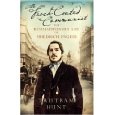 China’s consumption has of course fascinated people for centuries. So I was interested to note while reading the excellent new biography of Frederich Engels by Tristram Hunt –
  Anyway, with the American crash of 1857 Engels was rapturous believing that the knock on effects would politicse the English working class and lead to a revolution – ‘a period of chronic pressure is needed to get people’s blood up’, he wrote to Marx in London from his home in Manchester. But Engels was to be disappointed – working class demoralisation and subsequent revolutionary radicalisation didn’t happen and in spring 1858 he noted to Marx that demand for cotton was up again due largely to surging demand in the emerging markets of India and China. Ergo – China stopped England having a good bloodletting and a revolution. Engels wrote finally to Max on the subject declaring the booming consumption in China to be the end of the window of opportunity for a decent revolution.
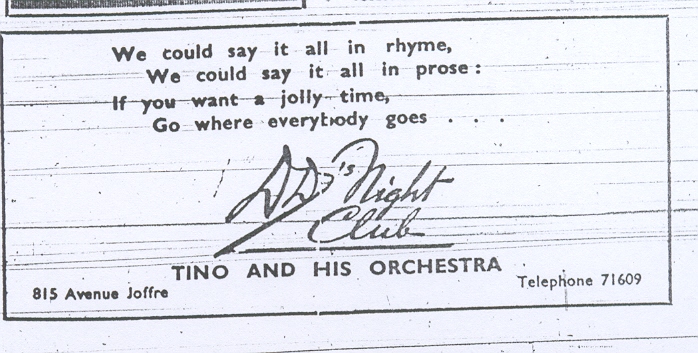 A good friend sent me a copy of the DD’s Cocktails guide published around 1939. DD’s was a chain of nighttime venues in Shanghai that moved around a bit but included a Cafe on Bubbling Well Road (Nanjing West Road) and a nightclub on the Avenue Joffre (Huai Hai Road). Pretty classy joints by all accounts. Obviously the cocktail guide is a nice little promotional for them with plenty of recipes and some risque drawings that would certainly have attracted my custom.
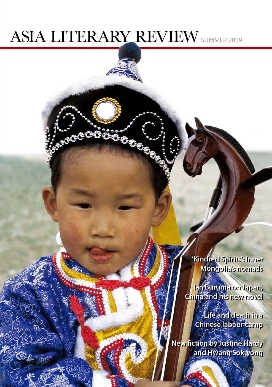 A few months back when I was mentioning
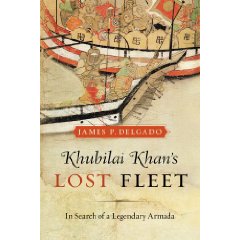 Earlier this year I read James Delgado’s new book
 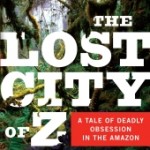 If you haven’t read it then I heartily recommend David Grann’s book
  Well, before he became fascinated by China one of my great heros Peter Fleming of One’s Company and News From Tartary fame had gone n search of Fawcett (pictured left). In April 1932 Fleming replied to an advertisement in the personal columns of The Times: “Exploring and sporting expedition, under experienced guidance, leaving England June to explore rivers central Brazil, if possible ascertain fate Colonel Percy Fawcett; abundant game, big and small; exceptional fishing; ROOM TWO MORE GUNS; highest references expected and given.”
 Fleming (left) couldn’t resist and joined the expedition, organised by Richard Churchyard and a certain Major Pingle. They travelled to São Paulo, then overland to the rivers Araguaia and Tapirapé, heading towards Fawcett’s last-known position. It was a bumbling effort – they all argued and eventually Fleming and Roger Pettiward (his school and university friend recruited onto the expedition as a result of a chance street encounter with Fleming) led a breakaway party to look for Fawcett on their own. The expedition’s return journey was made down the river Araguaia to Para Belém; it became a closely-fought race between Fleming’s party and Major Pingle, the prize being to be the first to report home and to gain the upper hand in the battles over blame and finances that were to come. Fleming’s party narrowly won.
 Fleming also won in the publicity stakes – getting back he quickly wrote a book Brazilian Adventure which was a hit, turned him into a pin up idol for girls in English public schools and began his reputation as an adventurer that ended up with him travelling to China.
 I’ve noticed that a Tesco Local store is about to open around the corner from my house in Shanghai on Dingxi Lu. What with a Starbucks round the other corner Changning District feels more like Camden Town these days than China! Still it’s going to be a 24 hour store which suits my routine and maybe they’ll have a good selection of vegetables.