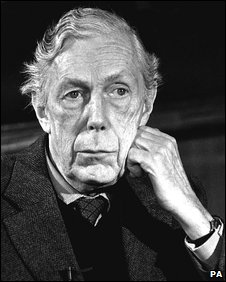
Apologies for another deviation posting away from China but this is interesting. You can’t help but be fascinated by the release of the Blunt papers. Blunt’s memoirs were lodged in the British Library in 1984, a year after Blunt’s death, on condition that they were kept secret for 25 years. Now they’re available.
They appear to be interesting in as far as they shed light on the man himself rather than the period as such or any operational tidbits – we have a pretty good idea of why Kim Philby, Donald Maclean, Guy Burgess and Blunt (plus the other Cambridge types the security services have never bothered to tell us about) became agents of the KGB and passed secrets to the Soviets. Of course depending on your politics and fondness for the upper classes you can decide how much you understand them. Personally I think they saw themselves as an elite and though genuinely concerned with the rise of fascism remained snobs and were not politically committed enough to endure the hard slog of organised opposition or mixing with the great unwashed and so opted for espionage which by and large meant retaining their money, priveleges and lifestyles. As intelligent men they should have understood who exactly they were working for – the old canard that they knew nothing of the realities of Stalinism doesn’t really hold much water.
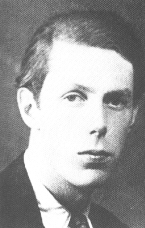
Blunt wrote the 30,000-word document after Thatcher exposed him in 1979. Working as the Surveyor of the Queen’s Pictures he was stripped of his knighthood (oh, what an awful punishment!!!). What is interesting is that Blunt is an odd case in one respect – that he was posh, considered himself academically brilliant and a member of the ruling class are all just qualifications for treachery – but that he was a don recruited by a student is a reversal of the usual process.
Of course he could be being disingenuous (he was a spy after all) but he claims it was all a mistake – “The atmosphere in Cambridge was so intense, the enthusiasm for any anti-fascist activity was so great, that I made the biggest mistake of my life.â€
Anyway – over the coming days presumably more details will emerge and the entire document somewhere.
One thing that has always annoyed me about Blunt was that after being unmasked in 1964 he confessed after being offered immunity and gave the authorities “all the information that I had about the Russian activitiesâ€. He was then allowed to go back to work for the Queen knighthood and social position intact etc. Who says the class system and privilege is dead in Britain!! I promise you that if Blunt had come from a more lowly and less socially connected background (like most of us) there would have been no immunity, no going back to work and getting paid (let alone for Queenie), no being let off (or indeed any chance to go to Cambridge in the 1930s either actually) and no embargoing your memoirs in the British Library for 25 years – for anyone else it’d have been life in Wormwood Scrubs. Being posh still works in Britain it seems.
I’ve always thought expensive pens ridiculous. Why, in a world where everyone from hotels and banks to Dunkin Donuts and my internet provider gives me free pens, would I pay a large amount of money for a pen? They won’t make the manuscript any better or easier to research or write, my cheques will still bounce whatever they’re signed with – who cares? Well, idiots is the only conclusion I can come to.
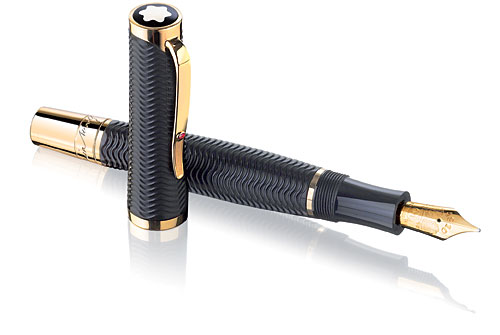
But then you could be a double idiot and buy one of Montblanc’s ‘limited edition’ Virginia Woolf pens I just saw on sale in Taipei’s Sogo store. Why Montblanc has done these is a bit if a mystery except they must think they are mugs out there who will cough up loads of money for them. The Montblanc website claims:
“The Writers Edition “Virginia Woolf†is oriented impressively to the literary heritage of the writer it is named after: 75 years after the publication of the novel “The Wavesâ€, finely engraved guilloche work recalls Virginia Woolf’s most outstanding work and her eventful life. In the form of waves, the guilloche work covers the body of jet-black precious resin, underlining the lighty curved silhouette.â€
What bollocks. There’s no indication that Virginia used a Montblanc to write any of her books, love letters to any of her Bloomsbury Group lovers or a suicide note.
It’s highly unlikely Virginia would have used a Montblanc – the company was founded in 1906 (though the founder fled to America having stolen all the company funds in 1909 – so the notion of Montblanc being a rip off is nothing new). Virginia died in 1941 long before the brand became the “icon†of luxury it now claims to be and anyway it was hardly her style to go chasing brands
For most of their history Montblanc produced pretty ordinary pens until acquired by Dunhill when they started hyping up their pens (to the detriment of their quality many pen aficionados claim) and claiming that owning one would somehow make you more like one of their numpty headed Hollywood endorsers (who we can safely say Virginia would have had little time for). The poor old Bloomsburyite must be spinning in her grave!!
So waste money on this nonsense if you want but remember – writing with an overpriced Montblanc Virginia Woolf pen won’t mean that writing of the quality of To the Lighthouse or Mrs Dalloway’s Diary will appear on the page. It’s hardly the pen that makes the difference! Best leave Montblanc to conniving pols signing treaties they know they’re going to break and investment bankers writing themselves bonus cheques.
Still – I do hope to see some fake Virginia Woolf Montblancs on the streets of Shanghai soon.
A final post from a recent trip to Macao and some photos of the monument to the British army and navy members that composed the 1841 China Expedition. That expedition was part of the First Opium War and mostly was formed to fight what became known as the Battle of Canton in May 1841.
In January the Royal Navy had shelled around Canton creating beachheads and by May they were able to force the city to surrender. The British then bombarded and looted the city. Both the Chinese and British then retreated with fierce skirmishing. By June British forces had left the area.
The interesting thing about this fight in the overall First Opium War is that it saw civilians take matters into their own hands. The British had ended up fighting an 8,000 strong Chinese civilian army which proved far more effective than the Qing army had been. It was the civilian army (bolstered by 12,000 additional civilian soldiers from the north) that eventually forced the British to terms and not the Qing forces. This experience was to severely dent the reputation the Qing.
Danwei (which I think is still rather annoyingly blocked in mainland China – or at least was on Monday when I departed for Taiwan) has links to some photos of early Chinese nudes, either drawings or pictures of posing models from the early 1910s to the late 1940s. There’s also a link to some early photos of Taiwan from a collection called the Souvenirs de Formose et des ÃŽles Pescadores (Ogawa, Tokyo 1896). Click here for Danwei or to circumvent the pathetic tantrums of the net nanny here for the nudes and here for the early Taiwan pics. Both sets of pictures have been uploaded by Thomas H Hahn who Idon’t know but looks like an interesting guy judging by his website and more power to him.
I’ve long been interested in New York’s history and picked up a few books on a trip there earlier this year which found themselves at the top of my holiday reading pile now I have a month of reading before me (-3 days now already). I was once told that when it came to historical fiction you can kill a book with too much information. Consequently I’ve personally stayed away from fiction and decided non-fiction allowed me to over-inform a readership that largely wants to be over-informed. Then I read Heyday by Kurt Andersen (he of the New Yorkerand the excellent Studio 360 radio show). It’s a rollicking story that flashes from London to France, all across America but by far most of the book and the best bits are set in New York in 1848.
Andersen simply loads the narrative down with historical detail for 600 pages and I loved it – the Lower East Side B’hoys, the volunteer fire crews, bordello etiquette, minstrel shows, opium, the Astor Hotel, the ethic map of mid-nineteenth century Manhattan (including the Irish, the Germans, the English, the Jews, the blacks etc etc),the underground railway etc etc…on and on with detail that is usually woven well into the story and when it isn’t it still doesn’t bother you that much. It’s also a good piece of fiction though to be honest the parts set in England and France rang less true than New York (obviously Andersen’s obsession).
I also threw a copy of TJ Gilfoyle’s excellent A Pickpocket’s Tale: The Underworld of Nineteenth Century New York. The true story of George Appo, half Chinese and one of the most notorious pickpockets of his time. Gilfoyle takes you through the life of a pickpocket and those who ran the Green Goods Game (a famous sting played out on yokels at the time by city criminals) as well as the opium den culture of Manhattan.
Two better reads on New York in the nineteenth century would be hard to find and incidentally, as I get asked the question a lot, if you’re thinking of writing an historical novel Heyday would be a good education and if you’re thinking of writing engaging non-fiction (i.e. not just something for the academics and a few libraries) then Gilfoyle is an equally good education.
My new book – Through the Looking Glass – China’s Foreign Correspondents from Opium Wars to Mao – has been out a month or so in Asia (the boats full of books will eventually get to Europe and America after the summer). So a few early reviews and associated stuff that may be of some interest have appeared:
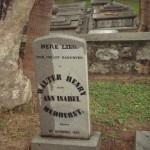
got a bit delayed in getting up some older posts from a recent trip to Macao. So time to catch over the summer before other stuff intervenes again. Remembered I haven’t mentioned the old Protestant Cemetery after noting George Chinnery’s grave a while back here are a few more images of the cemetery and Morrison and Walter Medhurst’s daughters grave.
Robert Morrison (1782-1834) was a Scottish missionary, the first Christian Protestant missionary in China. After 25 years of work he translated the whole Bible into Chinese and baptized ten Chinese believers. He did lot else as well that time and space do not allow – click here to see more. Although he died at Canton he was buried Morrison was buried in the Old Protestant Cemetery in Macao. The inscription on his marker reads:
Sacred to the memory of Robert Morrison DD.,
The first protestant missionary to China,
Where after a service of twenty-seven years,
cheerfully spent in extending the kingdom of the blessed Redeemer
during which period he compiled and published
a dictionary of the Chinese language,
founded the Anglo Chinese College at Malacca
and for several years laboured alone on a Chinese version of
The Holy Scriptures, which he was spared to see complete and widely circulated
among those for whom it was destined,
he sweetly slept in Jesus.
He was born at Morpeth in Northumberland
January 5th 1782
Was sent to China by the London Missionary Society in 1807
Was for twenty five years Chinese translator in the employ of
The East India Company
and died in Canton August 1st 1834.
Blessed are the dead which die in the Lord from henceforth
Yea saith the Spirit
that they may rest from their labours,
and their works do follow them
Next to him is buried his wife and child.
Sir Walter Henry Medhurst was born in Batavia in 1822 and died in Torquay in 1885.He was the son of the prominent British missionary (also) Walter Henry Medhurst. However, his son was educated in Macau where he acquired a good command of Chinese, Dutch and Malay. In October 1840, he was appointed Chinese secretary to the British superintend
ent of trade in China. During the Opium War, he worked under captain George Elliot and Sir Henry Pottinger. In the following years, he held a number of important consular official in Chinese treaty ports such as Fuzhou, Shanghai, Hangzhou and Hankou. However, he lost his daughter, Ann Isabel, while stationed in Macao and her grave lies in the old Protestant Cemetery.
A couple of interesting walks books recently published:
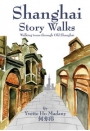
Shanghai Story Walks -Yvette Ho Madany – Step back into Old Shanghai with these scenic and history-laden walks and re-live the opulent lives of its elite. The hopes and dreams of taipans, politicians, actors, spies and dreamers can still be seen in the city’s landmarks, grand, gracious and gaudy, as our guide, Yvette Ho Madany, brings the lost city back to life.
Walking Macao – Jeremy Tambling and Louis Lo – We are suckers for old Macao the authors consider the special nature of Macao’s baroque, they discuss whether its Chinese architecture – its temples and gardens and houses – are also baroque; and what is the importance of the new casino architecture, much of which imitates ‘the baroque’ in its post-modern character. Weaving discussion of Camoes’ epic poem, ‘The Lusiads’, about Portuguese imperialism, and Chinnery’s paintings into the exploration of Macao’s present buildings, the book contains 125 original photographs that add to the unique perspective that it provides for the thoughtful visitor or the longstanding lover of the city.
 Apologies for another deviation posting away from China but this is interesting. You can’t help but be fascinated by the release of the Blunt papers. Blunt’s memoirs were lodged in the British Library in 1984, a year after Blunt’s death, on condition that they were kept secret for 25 years. Now they’re available.
 Blunt wrote the 30,000-word document after Thatcher exposed him in 1979. Working as the Surveyor of the Queen’s Pictures he was stripped of his knighthood (oh, what an awful punishment!!!). What is interesting is that Blunt is an odd case in one respect – that he was posh, considered himself academically brilliant and a member of the ruling class are all just qualifications for treachery – but that he was a don recruited by a student is a reversal of the usual process.
 One thing that has always annoyed me about Blunt was that after being unmasked in 1964 he confessed after being offered immunity and gave the authorities “all the information that I had about the Russian activitiesâ€. He was then allowed to go back to work for the Queen knighthood and social position intact etc. Who says the class system and privilege is dead in Britain!! I promise you that if Blunt had come from a more lowly and less socially connected background (like most of us) there would have been no immunity, no going back to work and getting paid (let alone for Queenie), no being let off (or indeed any chance to go to Cambridge in the 1930s either actually) and no embargoing your memoirs in the British Library for 25 years – for anyone else it’d have been life in Wormwood Scrubs. Being posh still works in Britain it seems.
 I’ve always thought expensive pens ridiculous. Why, in a world where everyone from hotels and banks to Dunkin Donuts and my internet provider gives me free pens, would I pay a large amount of money for a pen? They won’t make the manuscript any better or easier to research or write, my cheques will still bounce whatever they’re signed with – who cares? Well, idiots is the only conclusion I can come to.
 “The Writers Edition “Virginia Woolf†is oriented impressively to the literary heritage of the writer it is named after: 75 years after the publication of the novel “The Wavesâ€, finely engraved guilloche work recalls Virginia Woolf’s most outstanding work and her eventful life. In the form of waves, the guilloche work covers the body of jet-black precious resin, underlining the lighty curved silhouette.â€
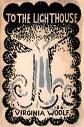 It’s highly unlikely Virginia would have used a Montblanc – the company was founded in 1906 (though the founder fled to America having stolen all the company funds in 1909 – so the notion of Montblanc being a rip off is nothing new). Virginia died in 1941 long before the brand became the “icon†of luxury it now claims to be and anyway it was hardly her style to go chasing brands
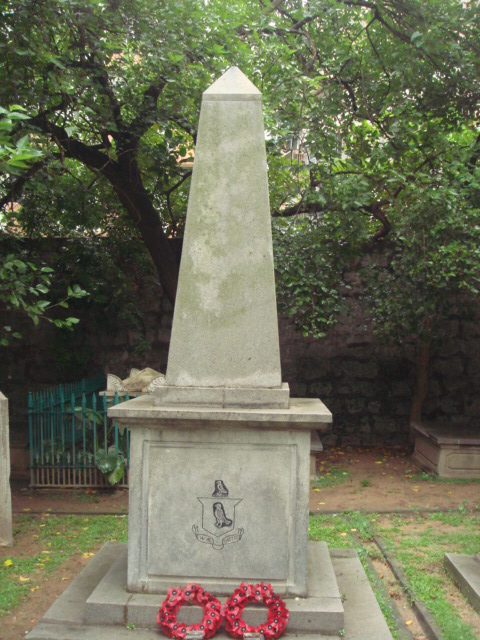 A final post from a recent trip to Macao and some photos of the monument to the British army and navy members that composed the 1841 China Expedition. That expedition was part of the First Opium War and mostly was formed to fight what became known as the Battle of Canton in May 1841.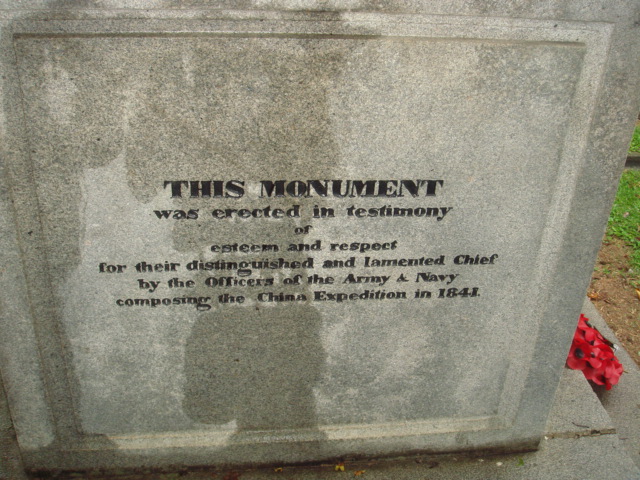
 Danwei (which I think is still rather annoyingly blocked in mainland China – or at least was on Monday when I departed for Taiwan) has links to some photos of early Chinese nudes, either drawings or pictures of posing models from the early 1910s to the late 1940s. There’s also a link to some early photos of Taiwan from a collection called the Souvenirs de Formose et des ÃŽles Pescadores (Ogawa, Tokyo 1896). Click
  I’ve long been interested in New York’s history and picked up a few books on a trip there earlier this year which found themselves at the top of my holiday reading pile now I have a month of reading before me (-3 days now already). I was once told that when it came to historical fiction you can kill a book with too much information. Consequently I’ve personally stayed away from fiction and decided non-fiction allowed me to over-inform a readership that largely wants to be over-informed. Then I read
  I also threw a copy of TJ Gilfoyle’s excellent
  My new book – Through the Looking Glass – China’s Foreign Correspondents from Opium Wars to Mao – has been out a month or so in Asia (the boats full of books will eventually get to Europe and America after the summer). So a few early reviews and associated stuff that may be of some interest have appeared:
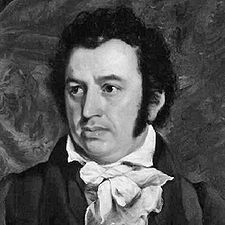 Robert Morrison (1782-1834) was a Scottish missionary, the first Christian Protestant missionary in China. After 25 years of work he translated the whole Bible into Chinese and baptized ten Chinese believers. He did lot else as well that time and space do not allow – click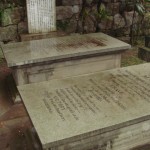
 Shanghai Story Walks -Yvette Ho Madany
 Walking Macao – Jeremy Tambling and Louis Lo