Dope Girls and Brilliant Chang
Posted: December 17th, 2008 | No Comments »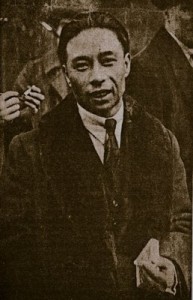 I just listened to the excellent Bishopsgate Institute lecture by Marek Kohn entitled Cocaine Girls in the West End. For those not familiar with him Kohn is the author of the excellent Dope Girls: The Birth of the British Drug Underground (Granta, 2001) and a Visiting Fellow in the School of Life Sciences at the University of Sussex, and in the Centre for Applied Philosophy, Politics and Ethics at the University of Brighton. An academic yes; but not one of the all too common dreary ones fortunately.
I’ve long been interested in the drug panic that erupted in London’s West End during and just after the First World War – cocaine possession was banned, but cocaine became the dominant drug in the jazz and nightclub scene that thrived in the years after the Great War. Its use by women was a source of particular alarm and was often used to illustrate how women were unable to cope with the independence they were pursuing. My grandmother was a waitress at the Charing Cross Lyons Corner House (they were known as ‘nippies’) and remembered the Flapper girls who turned up late at night after partying hard.
One of the interesting bits of fall out from this period was the case of Brilliant Chang (pictured above), a Chinese guy who had pitched up in Limehouse (then London’s Chinatown) as a sailor like so many others. He moved into the restaurant trade and opened a place called ‘Shanghai’ but also sold dope to the flappers. This kind of ethnic cross-over, drug dealing and quite possibly, so the press fulminated at the time, inter-racial sexual shenanigans outraged many.
Chang was then implicated in the overdose and death of a young nightclub singer in 1922, hauled into a court and in a sensational trial in 1924 (plenty of ‘Yellow Peril’ from the ever reliably racist Daily Telegraph) sent down and eventually died in poverty.
I’ve long wanted to head back to my old stamping grounds of the East End and look into Brilliant Chang’s life – nobody much has written about him except Kohn and, as far as I know, nobody has gone back to find out how, why or when he first came from China to England. He remains a bit of an enigma.
Leave a Reply